



QUANTIFY RESEARCH is a global partner to the pharmaceutical industry in close partnership with academia, patients, public institutions & clinical experts.
Real-world evidence & analytics
Quantify is the leading provider of RWE generated from the world-renouned Nordic data. Through our local presence, expert staff, institutional know-how and more than 10 years’ hands-on experience with the Nordic data, we offer an unparalleled ability to advise and execute Nordic RWE studies with local and global applications. Quantify has a successful track record of advising clients on securing Nordic ethical approval, data access, and optimizing analysis for commercial or regulatory purposes. We also offer RWE services in the EU, UK, and US.
Modelling, Access & Strategy
Quantify is a global provider of health economic evidence and a specialist provider of Nordic market access services including economic models, reimbursement dossiers, and strategic advice. Our experience and expertise ensures an optimized, streamlined market access process across the Nordics. For non-technical stakeholders, Quantify also develops value tools and visualisation dashboards to enhance communication. Our expert staff include ex-payers, ex-pharma, modelling experts, and experienced project managers.
Evidence review & synthesis
Quantify has long standing experience reviewing, interpreting and communicating evidence as part of targeted or systematic literature reviews (SLR). Our team ensures these activities are done systematically, with a focus on usability, to support knowledge management and commercialization activities. QUANTIFY is experienced in summarizing the results of this work through meta-analyses and narrative reviews. Our team consists of 50% PhDs and integrated AI solutions to provide our clients with the very best services.
Press
Some days are just a little more special than others🦌
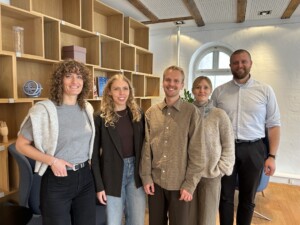
Quantify Research Denmark has been named a Børsen Gazelle 2026!
We are delighted, humbled, and proud to receive this recognition from Børsen.
This recognition reflects the dedication of our team and the trust our clients have placed in us over the past four years.
A heartfelt thank you to our colleagues, clients, and partners who have been part of this journey.
We look forward to […]
Let’s talk oncology RWE at ESMO 2026
Heading to Madrid for ESMO 2026? So are we!
From 23–27 October, Cathrine Tipsmark and Johan Liseth Hansen will be attending ESMO alongside our colleagues from the athagoras Group.
We look forward to connecting with industry peers and discussing how real-world evidence can address key challenges across the oncology product lifecycle.
Whether you’re working in Medical Affairs, Clinical Development, HEOR, Market Access or Commercial Strategy, we’d […]
Meet Selin, our new Senior FP & A Manager!
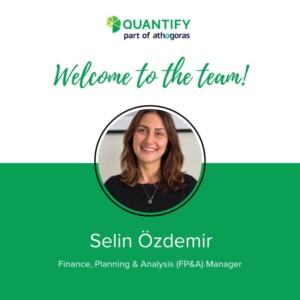
We are very pleased to welcome Selin Özdemir to Quantify Research.
Selin brings more than 10 years of experience in FP&A and business controlling across international organisations.
Her background includes global finance roles within the biopharma and SaaS industries, supporting large-scale businesses across planning, forecasting, reporting, performance management and financial systems.
Outside work, Selin is passionate about wellbeing and building communities. She is also […]
Which outcomes should health economic assessments capture?
Last week, Cathrine Tipsmark and Laura Tølløse attended the Annual Meeting of the Danish Society for Health Economics (DSSØ).
The programme covered a broad range of topics, from local healthcare systems to economic assessments of mental disorders in children and adolescents.
One discussion particularly stood out: Outcome measures in economic assessments.
QALYs serve as the standard economic benchmark in healthcare evaluation, focusing on quantifying health-related quality of life.
Alternative […]